

Ilhabela—one of the most sought-after destinations on São Paulo’s northern coast—is a versatile spot that appeals to a wide range of travelers, including couples, groups, families , and solo adventurers.
The island offers over 40 beaches, each with its own unique charm, from serene and secluded to lively and breathtakingly scenic.
Additionally, 94% of the island is covered by preserved Atlantic Forest, home to the Ilhabela State Park, which boasts the title of the largest island-based Atlantic Forest reserve in the world.
This makes Ilhabela not just a beach destination but also a haven for trekking, mountaineering, and hiking, featuring dozens of waterfalls, traditional communities, and diverse wildlife—all in one place.
However, despite being a favorite getaway, reaching the island can be a bit tricky, especially for backpackers. Even as a Brazilian, I had to do some thorough research to figure out how to get there by bus when I went for the first time.
So, enough talk. Let’s get to the point.
Arriving in Ilhabela by “Bus”
In order to provide you with the most realistic scenarios, we will approach you from 3 different departure points:
-
from the capital of São Paulo to Ilhabela
-
from Guarulhos Airport to Ilhabela
-
from Ubatuba to Ilhabela
In addition, the availability and schedules mentioned were based on the Buson* app. This is the app I use to search for, reserve and buy bus seats completely online.
São Sebastião-Ilhabela Ferry Crossing
There’s an important detail to keep in mind regardless of your starting point.
Buses don’t actually go all the way to Ilhabela; they stop at the entrance to the São Sebastião-Ilhabela ferry crossing. This is where you’ll board a ferry to reach the island.
So, when you buy a bus ticket to Ilhabela, you’re really purchasing a ticket to the São Sebastião ferry crossing, even if your ticket says “Ilhabela” as the destination.
“Why list Ilhabela as the destination if the bus doesn’t go to the island?” This is for bus disembarkation control.
When the bus arrives in São Sebastião, there are two stops: one at the São Sebastião Bus Terminal and the other at the São Sebastião-Ilhabela ferry crossing. The driver, knowing you’re headed to Ilhabela, will suggest you get off at the ferry stop, which is just a minute’s walk from the ferry boarding area.
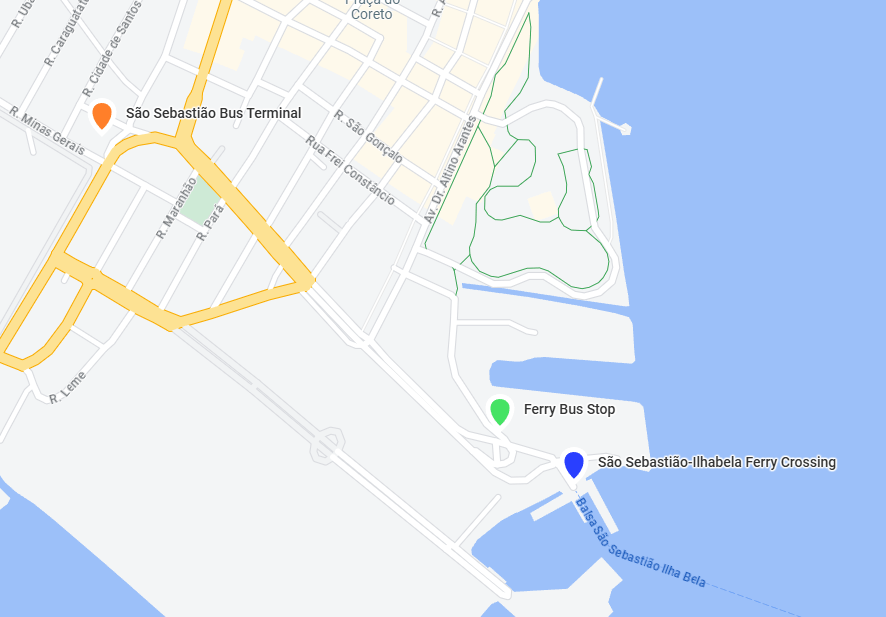
If you mistakenly get off at the bus terminal, you’ll have to walk about 15-20 minutes to reach the ferry. While not a long walk for most backpackers, it’s good to know the correct stop.
If you’re on foot or bike, the ferry is free; only motor vehicles (motorcycles, cars, trucks, etc.) are charged. Don’t worry about availability or timing—the ferry operates 24/7, with a departure every hour at most.
Now that you’re aware of how the ferry crossing works, let’s discuss your departure options.
Capital of São Paulo to Ilhabela
Many backpackers travel to Ilhabela from São Paulo’s capital. The state often serves as a starting point for many travelers, either because most international flights to Brazil land in São Paulo or because flights to the state are generally more affordable.
It’s common for backpackers to spend some time in the capital before heading to Ilhabela, as it’s one of the closest beach tourist destinations to the city.
From the capital, the process is straightforward. Buses to Ilhabela run approximately every 90 minutes via the Passaro Marron (“Brown” Bird) company from the Tietê Bus Terminal, with tickets costing around R$106.
Guarulhos Airport to Ilhabela
Some travelers choose to start their journey to Ilhabela from Guarulhos Airport, which is a popular option for those planning a backpacking trip through only the famous coastal cities of São Paulo and Rio de Janeiro. Typically, the route begins in Ilhabela and continues to Ubatuba, Paraty, Angra dos Reis and go on.
However, this starting point requires careful attention due to the potential for confusion. Guarulhos has two separate bus terminals: the Guarulhos Bus Terminal and the Guarulhos Airport Bus Terminal.
These are distinct locations, but many travelers mistakenly assume they are the same, leading to missed buses by arriving at the wrong terminal. The Guarulhos Bus Terminal is outside the airport, about a 10-minute Uber ride away.
For reaching Ilhabela, you need to go to the Guarulhos Airport Bus Terminal, which is located within the airport.
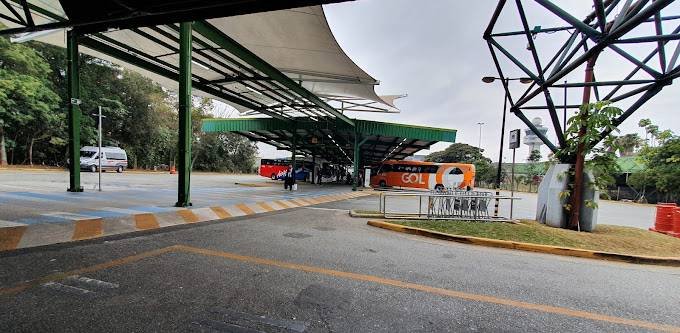 Photo of Guarulhos Airport Bus Terminal by José Roberto Almeida
The ticket details are similar to those for the route from São Paulo’s capital to Ilhabela:
- Bus Company: Passaro Marron
- Availability: Buses every 1.5 to 2 hours, on average
- Travel Time: 3 hours and 20 minutes
- Price: R$86
Ubatuba to Ilhabela
Just as some backpackers leave Ilhabela and head north toward cities in Rio de Janeiro, others travel the opposite route. These travelers starts in Rio de Janeiro, come from Paraty and Angra dos Reis, have recently stayed in Ubatuba, and are now heading to Ilhabela.
If you buy your tickets in person at the “Terminal Rodoviário de Ubatuba - Litorânea” (Bus Terminal), by requesting a ticket to São Sebastião, the seller will provide the available schedules (usually, there are three daily) and issue a single ticket for a bus departing from Ubatuba and stopping in São Sebastião. Unfortunately, this single ticket option is not available online.
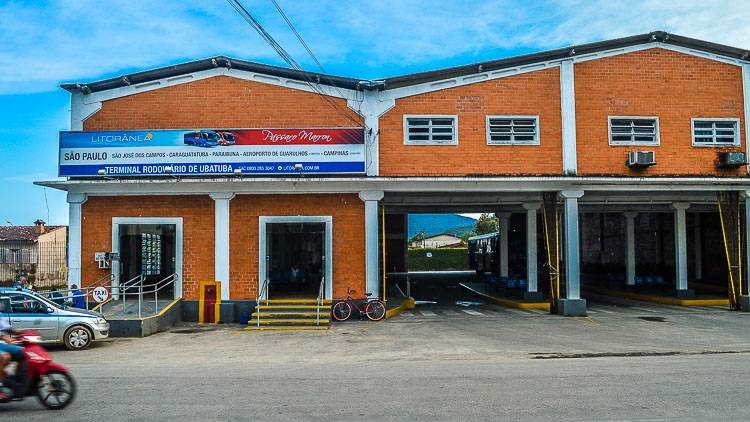 Photo of Terminal Rodoviário de Ubatuba - Litorânea from Ubatuba Guide
For those planning to buy tickets online, you’ll need to purchase two separate tickets, and depending on the schedule, you might even need to switch buses and wait for another one.
This is because the bus from Ubatuba heads to Caraguatatuba before continuing to other destinations. But not all buses that go to Caraguatatuba (after departing from Ubatuba) will then head to São Sebastião. This depends on the specific bus ticket and the leave time from Ubatuba of the bus that you purchased.
What Do You Need to Know When You Arrive in Ilhabela?
First, you should know that Ilhabela is quite large. So large that you’ll need to take a taxi or bus to fully enjoy what the island has to offer. This was my first surprise when I visited for the first time—I had imagined it would be similar to Morro de São Paulo (Bahia), where you can explore most of the area just by walking. That wasn’t the case here.
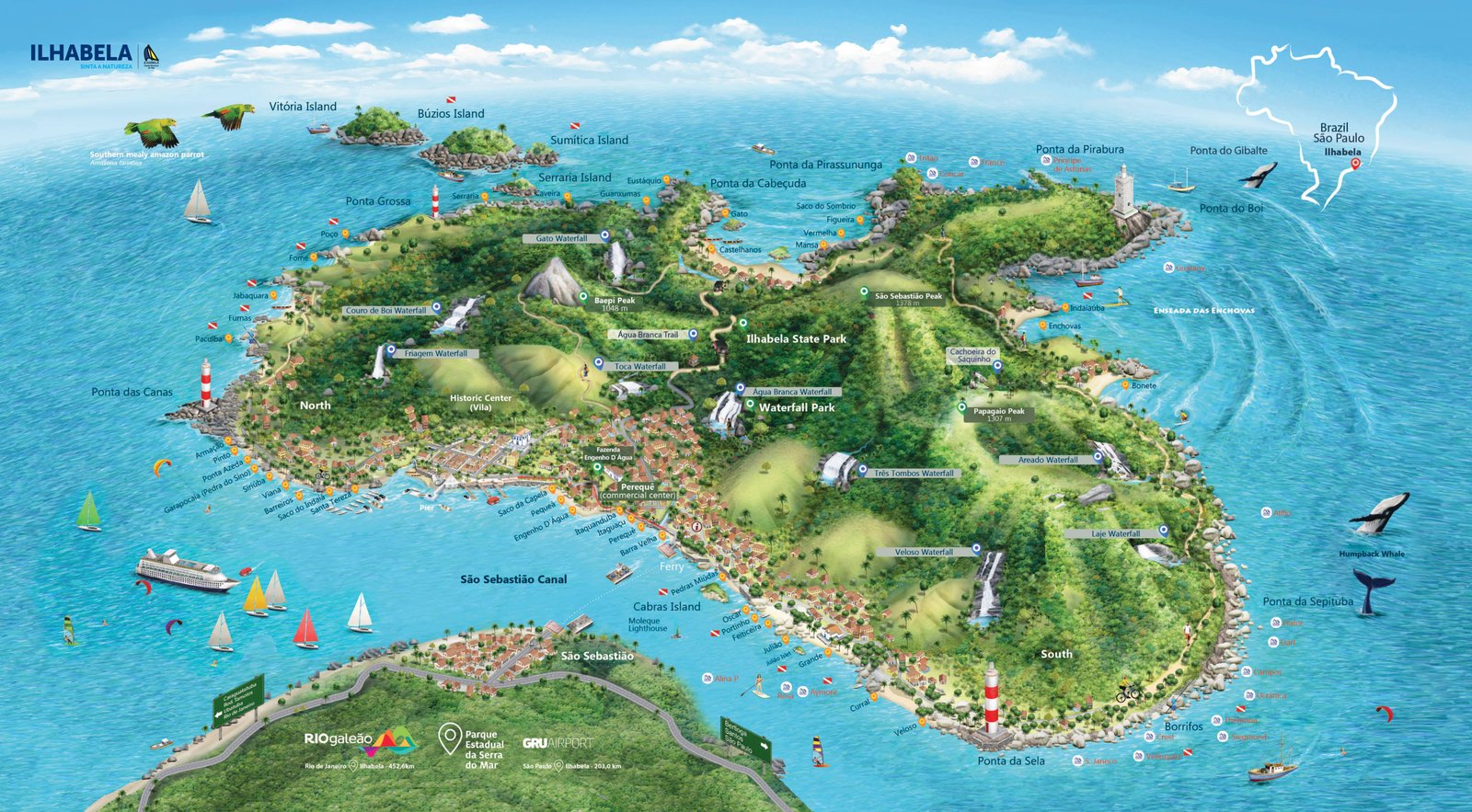 Map of Ilhabela from turismoilhabela.com
One crucial tip for all travelers, regardless of nationality: BRING CASH (in Brazilian Real)!
If you want to enjoy the most you can on the island, you’ll need to rely on transportation to get around.
The best value option is the local bus service (at the time of writing, the price was R$5 by cash).
Taxis are also available, but they are significantly more expensive. The last time I visited the island, the average price was around R$30-R$40 per ride. Many taxi drivers accept payment via PIX, but be aware that 4G signal can be spotty in some areas of the island. However, if you can only pay with a credit card or cash, cash is your best bet since most taxi drivers don’t have credit card machines.
And about Uber—Ilhabela doesn’t have enough driver base to offer affordable prices. You’ll find, at most, two drivers, with fares nearly as high as those charged by traditional taxis.
Now that you’re aware of the importance of bringing cash when visiting the island, let’s talk about getting around after disembarking from the ferry.
From the Ferry to Your Accommodation
After disembarking from the ferry, a short 2-minute walk will bring you to a wooden structure with benches—this is the Ilhabela Urban Bus Terminal, where you’ll wait for your bus. In front of it, you’ll find a line of taxis ready to take you to your destination.
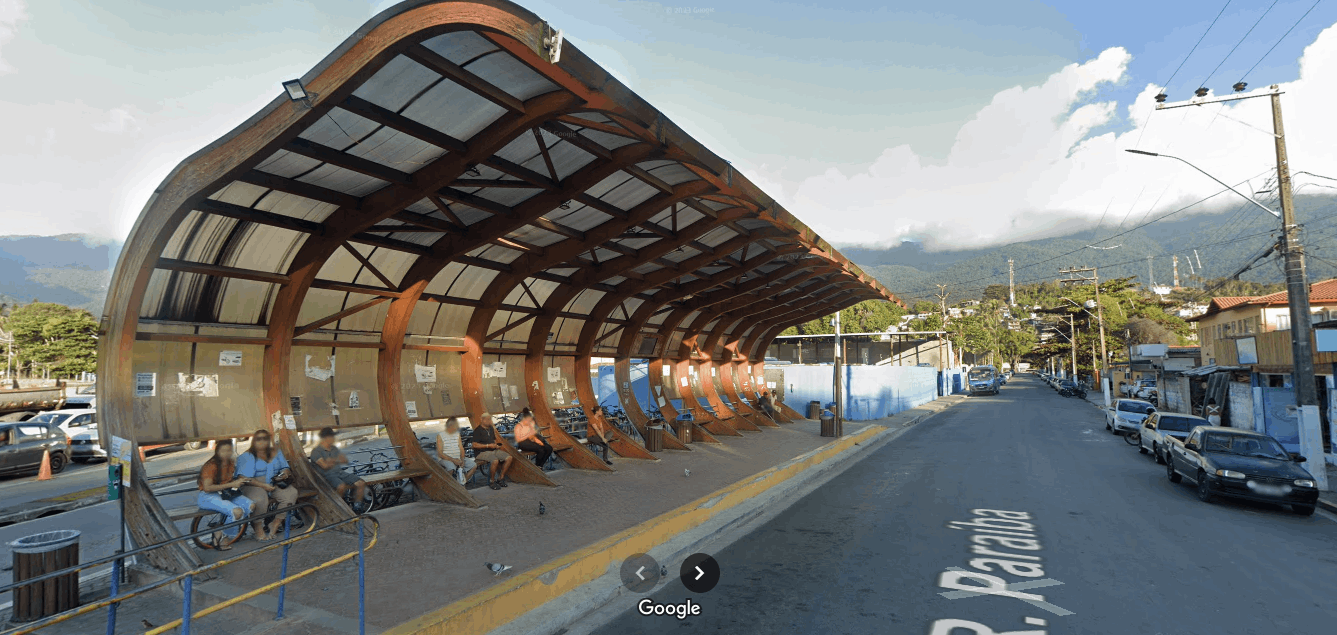 Photo of Ilhabela Urban Bus Terminal by Google Street View
Choosing Between Taxi and Bus
As mentioned, buses are much cheaper than taxis. However, based on my experience, navigating the bus system can be tricky for first-timers. I often took the wrong bus or got off too early or too late, leading to longer walks to my destination.
For non-Portuguese speakers, this can be even more challenging since not everyone speaks English. Also, after 11:00 PM, buses run less frequently, and there are no buses after midnight. Yet, relying on taxis for every trip can get expensive.
So, I recommend taking a taxi in just two cases: from the ferry to your accommodation and back. This way, you can settle in quickly and either rest or enjoy the remainder of your day.
For the rest of your island explorations, use the buses. Even if you get off at the wrong stop, it’s easier to manage without a heavy backpack.
Thanks and Recommendations
As I mentioned earlier, Ilhabela is a destination that caters to various types of travelers.
I’d love to share more tips about the island, but that would make this article much longer. However, future articles about Ilhabela will be linked here so you can easily access more information.
Thank you for following these tips—I hope they prove useful to you all. Stay tuned on praiagens.com.br for more articles on backpacking in Brazil.
Best regards!
